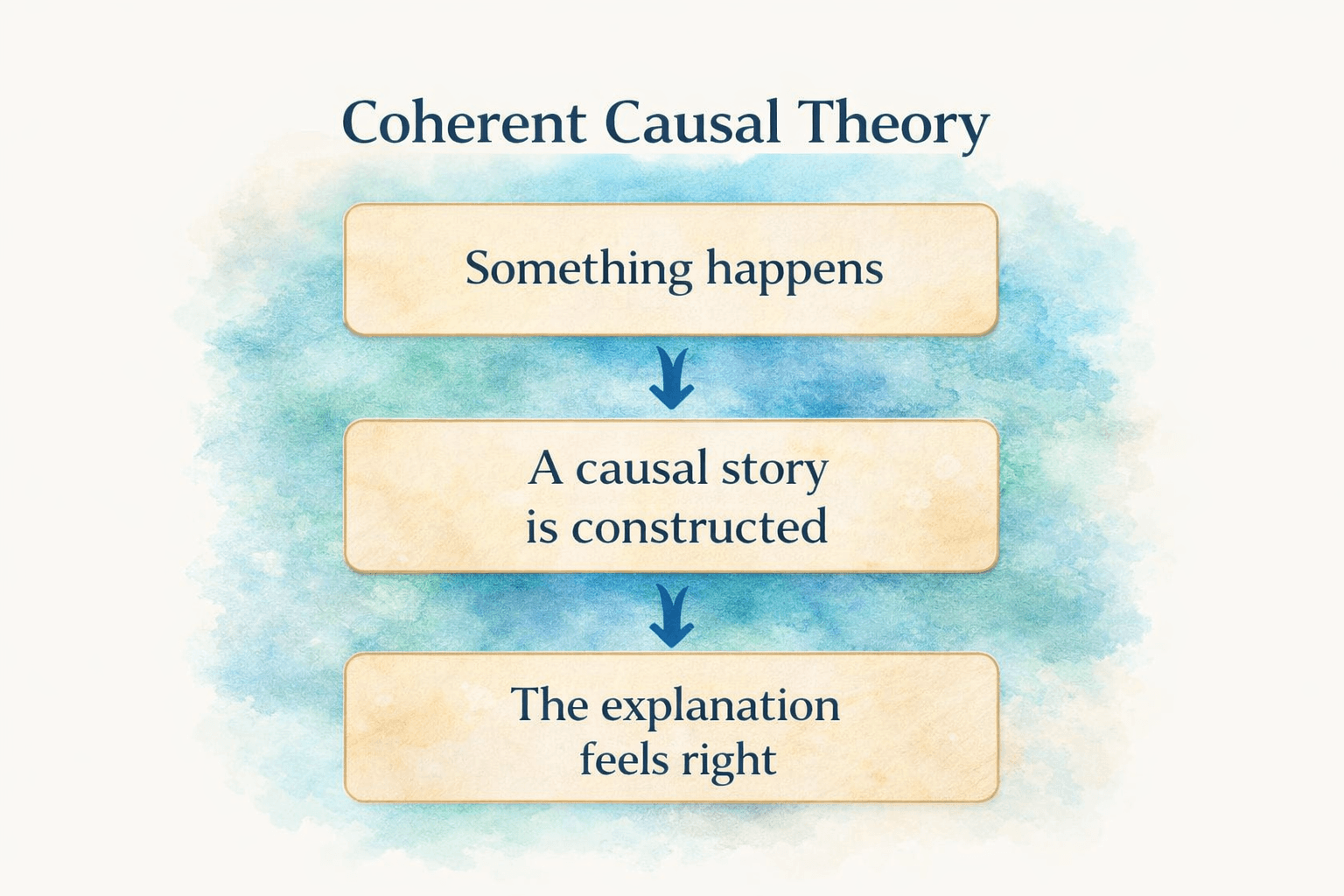
Coherent Causal Theory 1

Part 1 - The Story: The Night Shift Mystery
The Night Shift Mystery
It was 6:45 a.m. when Claire, the Production Manager, walked onto the shop floor. The night shift had struggled again: output was down 22%, scrap had doubled, and the shift supervisor left her a neatly written note that simply read:
"Team disengaged. Something isn't right. We need to fix morale."
Claire rubbed her eyes. Morale? The previous night's shift had hit their numbers. No one reported conflict. Attendance was solid. Nothing in the daily metrics hinted at motivation issues.
Trying to make sense of the shortfall, she asked Mark, the maintenance technician, a simple question:
"Any problems with the machines last night?"
Mark shrugged. "Not really. Press 3 had a couple of slow cycles, but nothing major."
Claire had a full calendar, a meeting at 8:00 a.m., and a dozen other issues brewing. Pressed for time, she accepted the "low morale" narrative. It was: tidy, plausible, emotionally satisfying, and most importantly: coherent.
It made the night's poor performance feel almost inevitable.
But at 10:15 a.m., everything changed.
A minor air‑pressure regulator downstream of Press 3 had jammed at 1:12 a.m. The clamp arm wasn't closing properly, causing intermittent micro‑stoppages. Operators didn't notice. The machine didn't alarm.
- The cause was mechanical.
- The problem was random.
- The team was not disengaged.
The story was simply wrong, but it felt right that morning because it was coherent.
Humans don't like loose ends. When something goes wrong, we instinctively build explanations that feel connected, logical, and complete. And that psychological force; what Daniel Kahneman calls Coherent Causal Theory, can mislead even experienced leaders.
Part 2 will explore why managers gravitate toward these neat stories, how coherent causal thinking can distort decision-making, and how to use it responsibly as a leadership tool.